
CSA Prevention & Understanding the POCSO Act
Equipping teachers, parents, and caregivers with the legal and emotional tools to protect children.
Available in Chandigarh, Mohali, Panchkula, Delhi, and Mathura.
Why This Session is Crucial
Child Sexual Abuse (CSA) is not rare—it's tragically underreported. Despite 1 in 2 children in India experiencing sexual abuse, the issues remain shrouded in denial, silence, and stigma.
This workshop emphasizes that CSA prevention is an adult responsibility. It bridges the gap between emotional understanding and legal duty by focusing on early recognition, appropriate response, and a clear understanding of the Protection of Children from Sexual Offences (POCSO) Act, 2012.
"In 95% of CSA cases, the abuser is known to the child. 53% of victims are boys. Awareness is our first line of defense."
What You Will Learn
Our objectives are to build a community of legally informed and emotionally prepared adult protectors.
Understand CSA & POCSO
Understand CSA, its forms, and the legal framework under the POCSO Act.
Mandatory Reporting
Understand mandatory reporting and referral systems (CWC, DCPU, Childline).
Recognize Signs of Abuse
Learn to recognize the subtle physical and behavioral indicators of abuse.
Handle Disclosures of Abuse
Learn the 'Do's and Don'ts' of how to respond when a child discloses any abuse.
Know Offences & Punishments
Learn about penal provisions, punishments (assault, harassment), and child rights.
Build Open Communication
Develop the confidence to talk openly with children about safety and consent.
Our Methodology
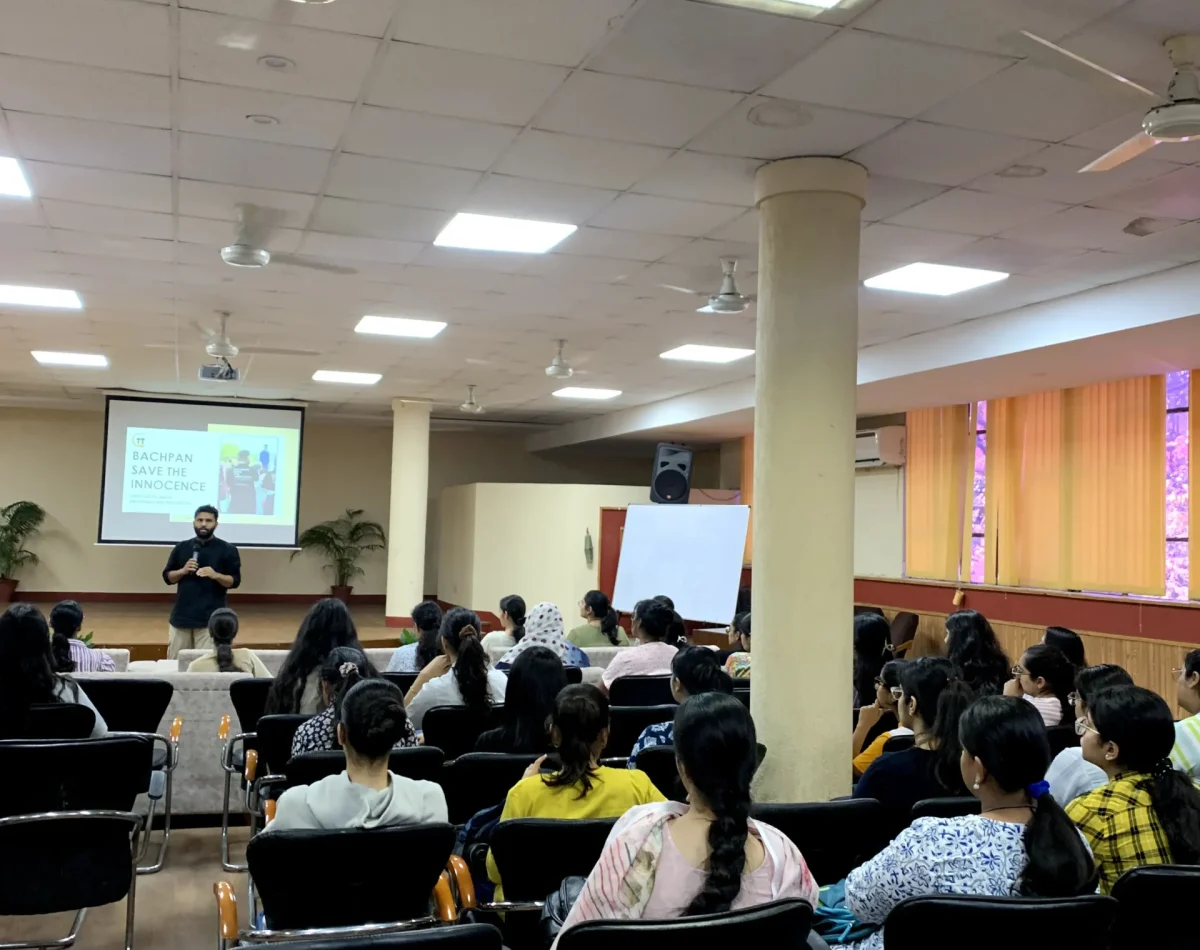
We combine legal expertise with empathetic, survivor-informed teaching methods to create a powerful learning experience.
Interactive Storytelling & Cases
Simplified Legal Awareness
Open Discussion on Myths
Role Play & Scenario Analysis
Reflection & Expert Q&A
Interactive Storytelling & Cases
Simplified Legal Awareness
Open Discussion on Myths
Role Play & Scenario Analysis
Reflection & Expert Q&A
Session Format
- Introduction: About the facilitator & BSTI’s work
- Understanding CSA: Myths, realities, and current statistics
- POCSO Overview: Key sections simplified
- Offences & Punishments: Assault, harassment, and pornography
- Loopholes & Realities: Mandatory reporting, false cases
- Handling Disclosures: How to respond to a child
- Parenting Patterns: Body shaming, comparison, generational trauma
- Straight Talk: How to communicate safety and consent to children
- Pre- & Post-Assessment + Certificate distribution
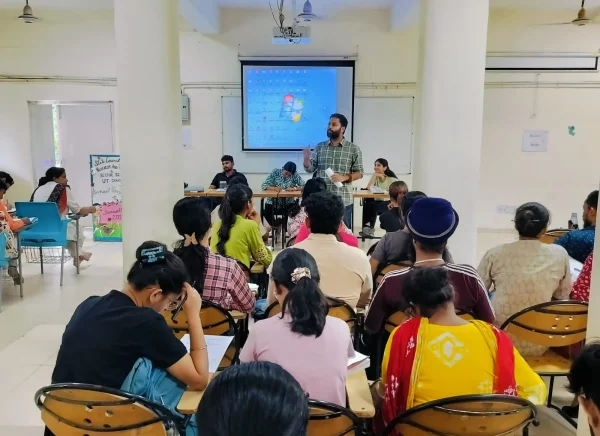
Logistics & Duration
- Duration: 3 hours
- Batch Size: 50 adults per session
- Assessment: Pre- and post-session evaluation
- Certificate: Provided to all participants
- Toolkit: "POCSO Awareness & CSA Prevention Guide"
Expected Outcomes
- Improved understanding of CSA and POCSO provisions.
- Participants learn how to respond, not react, to a disclosure.
- Increased awareness of mandatory reporting flow (CWC–DCPU–Childline).
- Participants gain confidence in having “straight talks” with children.
- Strengthened adult accountability—transforming awareness into action.
Our Tools & Stories in Action
Visuals, Toolkits & Stories
Real case-based stories from BSTI facilitators and survivors are shared to humanize the law, spark empathy, and inspire participants to act.
These stories help reframe CSA as a societal issue, not an individual tragedy—one that adults can prevent through awareness and timely action. All participants receive our prevention toolkit.